


High speed automatic industrial doors are advanced entrance solutions designed to improve operational efficiency, environmental control, and workplace safety in modern industrial facilities. With rapid opening and closing speeds, intelligent control systems, and durable construction, these doors help businesses optimize logistics flow, reduce energy loss, and maintain clean and secure working environments.
Widely used in warehouses, manufacturing plants, logistics centers, pharmaceutical facilities, food processing plants, cold storage warehouses, and automotive workshops, high speed automatic industrial doors have become an essential component of modern industrial operations.
Designed for frequent daily use, these doors provide reliable performance even under demanding industrial conditions. Their fast operating speed minimizes indoor and outdoor air exchange, helping maintain temperature stability while improving productivity and reducing operating costs.
One of the most significant advantages of a high speed automatic industrial door is its rapid opening and closing capability.
Typical operating speeds range from:
Opening speed: 0.8–2.0 m/s
Closing speed: 0.6–1.5 m/s
Fast operation reduces waiting times for personnel, forklifts, and vehicles, significantly improving workflow efficiency.
Modern industrial doors are equipped with advanced automation systems that support:
Remote control
Radar sensors
Motion detectors
Loop detectors
Push-button operation
RFID access control
Smart building integration
The intelligent control system allows seamless operation in high-traffic industrial environments.
The flexible curtain or insulated panel design provides effective sealing against:
Dust
Wind
Rain
Insects
Noise
Temperature fluctuations
This helps maintain indoor environmental conditions while improving energy efficiency.
High speed automatic industrial doors are manufactured using industrial-grade materials such as:
Galvanized steel frames
Aluminum alloy tracks
PVC door curtains
Reinforced fabric materials
Insulated composite panels
These materials ensure long-term durability and reliable operation.
Integrated safety devices provide comprehensive protection for personnel and equipment.
Common safety features include:
Infrared photoelectric sensors
Safety light curtains
Bottom safety edge
Obstacle detection systems
Emergency stop buttons
Manual emergency operation
The simplified mechanical structure and intelligent monitoring systems reduce maintenance frequency and operating costs.

The following specifications can be customized according to project requirements.
| Parameter | Specification |
|---|---|
| Door Type | High Speed Automatic Industrial Door |
| Door Curtain Material | PVC Fabric / Composite Panel |
| Frame Material | Galvanized Steel / Aluminum Alloy |
| Opening Speed | 0.8–2.0 m/s |
| Closing Speed | 0.6–1.5 m/s |
| Maximum Width | 8 m |
| Maximum Height | 8 m |
| Wind Resistance | Class 6–10 |
| Operating Temperature | -30°C to +70°C |
| Power Supply | 220V / 380V |
| Motor Type | Servo Motor |
| Control System | PLC Intelligent Control |
| Protection Grade | IP54 / IP65 |
| Operating Cycles | More than 1,000,000 Cycles |
| Safety Devices | Photo Sensors, Safety Edge, Light Curtain |
| Optional Features | Radar, Remote Control, RFID, Bluetooth |
The curtain serves as the primary moving component and is manufactured using high-strength PVC or reinforced industrial fabric.
Features include:
Tear resistance
Impact resistance
Weather resistance
Easy cleaning
Precision guide rails ensure stable movement and reduce operational noise.
The high-performance servo motor provides:
Fast acceleration
Precise positioning
Energy efficiency
Long service life
The control cabinet manages:
Door operation
Safety monitoring
Automatic functions
Fault diagnostics
Safety systems continuously monitor door movement and automatically stop or reverse operation when obstacles are detected.
Manufacturing plants often require rapid access between production areas.
Applications include:
Assembly lines
Production workshops
Equipment rooms
Material transfer zones
The fast operation helps improve production efficiency and environmental control.
Warehouse facilities use high speed automatic industrial doors to facilitate efficient movement of goods.
Benefits include:
Faster logistics operations
Reduced waiting times
Better inventory protection
Improved energy savings
Distribution centers rely on high-speed doors to support continuous vehicle and forklift traffic.
These doors help maintain smooth transportation workflows while minimizing heat loss.
Food production facilities require strict hygiene standards.
High speed automatic industrial doors help:
Prevent contamination
Control insects
Maintain temperature stability
Improve sanitation management
Cleanrooms and pharmaceutical production areas benefit from the excellent sealing performance and automatic operation provided by high-speed industrial doors.
Rapid door operation minimizes temperature fluctuations and helps preserve product quality.
Applications include:
Refrigerated warehouses
Freezer rooms
Cold chain logistics centers
Vehicle manufacturing and maintenance facilities use high-speed doors to improve operational efficiency while protecting equipment and personnel.

Rapid door operation reduces downtime and improves workflow efficiency.
By minimizing air exchange between indoor and outdoor environments, these doors help lower heating and cooling costs.
Excellent sealing performance helps maintain:
Cleanliness
Temperature
Humidity
Air quality
Integrated safety systems reduce accident risks and protect workers and equipment.
Industrial-grade components provide dependable performance even under continuous operation.
Proper installation ensures optimal performance and long service life.
Before installation:
Measure door opening dimensions.
Verify wall strength.
Check available installation space.
Confirm electrical supply requirements.
Install guide rails.
Mount support brackets.
Install motor system.
Fit door curtain.
Connect control cabinet.
Install safety devices.
Perform operational testing.
After installation:
Verify opening and closing speeds.
Test obstacle detection systems.
Confirm sensor functionality.
Inspect emergency operation features.
Ensure the doorway is clear.
Activate the door using the selected control method.
Allow the door to complete its movement cycle.
Observe the operation for any abnormalities.
In automatic mode, sensors detect approaching personnel or vehicles and trigger door operation automatically.
Always follow these guidelines:
Keep the doorway clear.
Do not obstruct moving components.
Never disable safety devices.
Report operational issues immediately.
In the event of power failure:
Use the emergency release mechanism.
Operate the door manually if necessary.
Restore automatic mode after power is restored.
Routine maintenance helps ensure reliable performance.
Check:
Door curtain condition
Sensor cleanliness
Guide rail obstructions
Abnormal noise
Inspect:
Motor operation
Fasteners
Electrical connections
Safety devices
Perform comprehensive servicing including:
System diagnostics
Motor inspection
Component replacement
Safety certification testing
A high speed automatic industrial door is an automated door system designed for rapid opening and closing in industrial environments, improving efficiency, safety, and environmental control.
Common industries include manufacturing, warehousing, logistics, food processing, pharmaceuticals, automotive production, and cold storage facilities.
Depending on the model, opening speeds can reach up to 2.0 meters per second, significantly faster than conventional industrial doors.
Yes. High speed automatic industrial doors are specifically designed for intensive daily use and can exceed one million operating cycles.
Yes. Specialized cold storage models are available for refrigerated and freezer applications.
Standard safety features include photoelectric sensors, safety edges, emergency stop systems, obstacle detection, and manual emergency operation.
Yes. The intelligent control system can integrate with RFID readers, card access systems, building automation platforms, and remote monitoring systems.
Daily inspections, monthly preventive maintenance, and annual comprehensive servicing are recommended for optimal performance.
High speed automatic industrial doors provide an ideal solution for facilities seeking efficient access control, energy savings, environmental protection, and workplace safety. Their rapid operation, intelligent automation, durable construction, and advanced safety systems make them suitable for a wide range of industrial applications.
Whether installed in warehouses, manufacturing facilities, logistics centers, food processing plants, pharmaceutical cleanrooms, or cold storage warehouses, high speed automatic industrial doors help improve operational efficiency while reducing long-term operating costs. With proper installation and maintenance, these doors provide reliable performance and excellent return on investment for modern industrial facilities.
A Thermal insulation industrial door is a specialized industrial access solution designed to minimize heat transfer between indoor and outdoor environments while maintaining efficient operation, security, and durability. As energy costs continue to rise and industries increasingly focus on sustainability, thermal insulation industrial doors have become essential components in warehouses, manufacturing facilities, cold storage buildings, logistics centers, food processing plants, pharmaceutical facilities, and temperature-controlled production environments.
Unlike conventional industrial doors, thermal insulation industrial doors incorporate advanced insulating materials, multi-layer panel structures, sealing systems, and energy-efficient designs that help maintain stable internal temperatures. These doors significantly reduce heating and cooling losses, improve indoor comfort, protect sensitive products, and support compliance with modern energy-efficiency standards.
In industrial facilities where temperature control directly impacts operational efficiency, product quality, and energy consumption, investing in a high-performance thermal insulation industrial door can deliver substantial long-term benefits.
This comprehensive guide explores the design, construction, materials, applications, technical specifications, advantages, maintenance requirements, and future developments of thermal insulation industrial doors.
What Is a Thermal Insulation Industrial Door?
A thermal insulation industrial door is an industrial door system specifically engineered to reduce thermal transfer between different environments.
The door acts as a barrier that helps maintain:
Interior temperature stability
Energy efficiency
Climate-controlled conditions
Product protection
Workplace comfort
Thermal insulation industrial doors are commonly installed in facilities where temperature management is critical to operations and energy costs.
Common installation locations include:
Warehouses
Distribution centers
Cold storage facilities
Refrigerated warehouses
Food processing plants
Pharmaceutical factories
Manufacturing facilities
Chemical plants
Logistics centers
Agricultural storage facilities
Why Thermal Insulation Matters in Industrial Buildings
Industrial buildings often have large openings that can become significant sources of energy loss.
Without proper insulation, facilities may experience:
Increased heating costs
Higher cooling expenses
Temperature fluctuations
Product degradation
Reduced employee comfort
Greater HVAC system workload
A thermal insulation industrial door helps minimize these issues by creating an effective thermal barrier.
How Thermal Insulation Industrial Doors Work
Thermal insulation industrial doors utilize multiple technologies to reduce heat transfer.
The primary insulating component is the door panel itself.
Typical panel structure:
| Layer | Function |
|---|---|
| Exterior Steel Skin | Structural protection |
| Insulation Core | Thermal barrier |
| Interior Steel Skin | Strength and durability |
| Protective Coating | Corrosion resistance |
Thermal breaks reduce heat conduction through metal components.
Benefits include:
Reduced thermal bridging
Improved energy efficiency
Better temperature control
Industrial doors use perimeter seals to prevent air leakage.
Common seal locations include:
Side seals
Bottom seals
Top seals
Joint seals
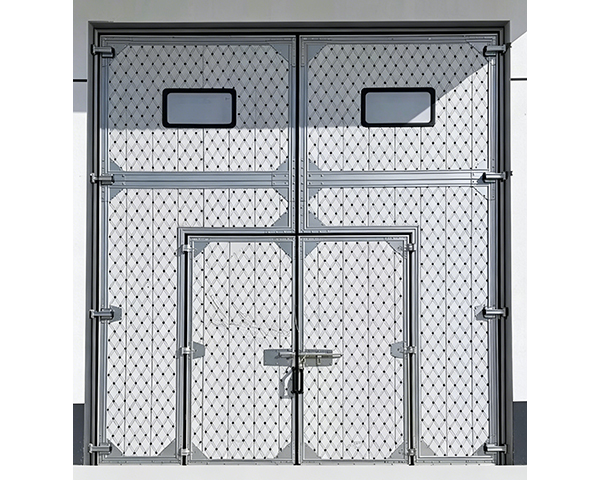
Many thermal insulation industrial doors incorporate automatic operation and rapid closing speeds to reduce energy loss.
Key Benefits of Thermal Insulation Industrial Doors
One of the primary advantages is reduced energy consumption.
Benefits include:
Lower heating costs
Reduced cooling expenses
Improved HVAC efficiency
Reduced carbon emissions
Thermal insulation industrial doors help maintain consistent environmental conditions.
Advantages include:
Improved production quality
Better storage conditions
Reduced temperature fluctuations
Maintaining stable indoor temperatures improves working conditions.
Benefits:
Better productivity
Improved comfort
Reduced exposure to extreme temperatures
insulated industrial doors help prevent:
Condensation
Moisture intrusion
Ice formation
Insulated door panels provide additional acoustic benefits.
They can reduce:
Equipment noise
Traffic noise
External environmental sounds
Types of Thermal Insulation Industrial Doors
Sectional doors are among the most common thermal insulation industrial door solutions.
Multiple insulated panels
Vertical lifting design
Excellent thermal performance
Warehouses
Logistics centers
Manufacturing plants
These doors combine rapid operation with thermal efficiency.
Reduced air exchange
Improved workflow
Energy conservation
Cold storage facilities
Cleanrooms
Food processing facilities
Rolling doors with insulated slats provide compact operation and thermal protection.
Space-saving design
Enhanced security
Thermal insulation
Suitable for large industrial openings.
Large opening capacity
Heavy-duty construction
Excellent insulation performance
Specifically engineered for refrigerated and frozen environments.
Thick insulation cores
Frost-resistant components
Airtight sealing systems
Common Materials Used in Thermal Insulation Industrial Doors
Galvanized steel is widely used for industrial door skins.
Advantages:
High strength
Corrosion resistance
Long service life
Ideal for hygienic and corrosive environments.
Applications:
Food processing
Pharmaceutical production
Chemical facilities
Provides lightweight construction.
Benefits:
Corrosion resistance
Reduced weight
Modern appearance
Insulation Core Materials
The insulation core significantly influences thermal performance.
Polyurethane is one of the most effective insulation materials.
| Property | Typical Value |
|---|---|
| Density | 40–48 kg/m³ |
| Thermal Conductivity | 0.022–0.028 W/m·K |
| Water Absorption | Very Low |
| Insulation Performance | Excellent |
Commonly used where fire resistance is a priority.
| Property | Typical Value |
|---|---|
| Fire Resistance | Excellent |
| Sound Absorption | High |
| Density | 80–150 kg/m³ |
| Thermal Performance | Good |
A cost-effective insulation option.
Advantages:
Lightweight
Affordable
Good thermal resistance
Technical Specifications
| Parameter | Typical Range |
|---|---|
| Door Width | 2m–20m |
| Door Height | 2m–15m |
| Panel Thickness | 40mm–120mm |
| Steel Thickness | 0.4mm–2.0mm |
| Opening Speed | 0.2–2.5 m/s |
| Wind Resistance | Class 3–12 |
| Operating Temperature | -40°C to +70°C |
| Thermal Transmittance (U-value) | 0.3–1.5 W/m²K |
| Motor Power | 0.75–5.5 kW |
| Operating Cycles | 50,000–1,000,000+ |
Understanding U-Value in Thermal Insulation Industrial Doors
The U-value measures heat transfer through a door.
Lower values indicate better insulation performance.
| U-Value | Performance Level |
|---|---|
| Above 2.0 | Basic |
| 1.5–2.0 | Moderate |
| 1.0–1.5 | Good |
| 0.5–1.0 | Excellent |
| Below 0.5 | Premium |
Applications of Thermal Insulation Industrial Doors
Warehouses benefit from:
Reduced energy costs
Stable storage conditions
Improved operational efficiency
Distribution facilities use insulated doors to maintain internal climate control.
Benefits:
Energy savings
Reduced HVAC load
Faster operations
Cold storage is one of the most important applications.
Requirements include:
Maximum thermal efficiency
Airtight sealing
Frost prevention
Food production facilities require:
Temperature consistency
Hygiene
Moisture control
Temperature-sensitive products require precise environmental conditions.
Insulated industrial doors help maintain:
Controlled temperatures
Product integrity
Regulatory compliance
Production environments often require climate-controlled workspaces.
Benefits include:
Process stability
Worker comfort
Reduced energy consumption
Energy Efficiency Benefits
Thermal insulation industrial doors prevent heat loss during winter months.
During summer, insulated doors reduce heat infiltration.
HVAC systems operate more efficiently when thermal losses are minimized.
Energy-efficient buildings contribute to:
Lower carbon emissions
Environmental responsibility
Reduced operating costs
Air Tightness and Sealing Systems
Proper sealing is essential for thermal performance.
Prevent air infiltration along vertical edges.
Reduce air leakage beneath the door.
Improve thermal performance at the upper opening.
Used between sectional panels.
Benefits:
Reduced air leakage
Enhanced insulation
Wind Resistance Performance
Industrial facilities often require doors capable of resisting strong winds.
| Wind Class | Application |
|---|---|
| Class 3 | Standard industrial use |
| Class 5 | Warehouses |
| Class 8 | Coastal areas |
| Class 10 | High-wind regions |
| Class 12 | Extreme weather conditions |
Automation and Smart Control Systems
Modern thermal insulation industrial doors often include advanced automation features.
Allow convenient operation.
Automatically opens doors when vehicles approach.
Enhance security and operational efficiency.
Supports centralized monitoring and control.
Provides:
Performance monitoring
Maintenance alerts
Energy usage analysis
Safety Features
Industrial doors must provide reliable protection for personnel and equipment.
Detect obstacles during operation.
Stop movement upon contact.
Allow immediate shutdown when necessary.
Enable operation during power failures.
Maintenance Requirements
Proper maintenance preserves insulation performance and reliability.
Check:
Door movement
Seal condition
Sensor functionality
Inspect:
Guide rails
Motor operation
Fasteners
Safety systems
Professional inspections should evaluate:
Structural integrity
Electrical systems
Insulation performance
Seal effectiveness
Common Problems and Solutions
| Problem | Possible Cause | Solution |
|---|---|---|
| Air Leakage | Damaged seals | Replace seals |
| Increased Energy Consumption | Insulation damage | Inspect panels |
| Condensation | Poor sealing | Improve airtightness |
| Door Misalignment | Track wear | Adjust guides |
| Excessive Noise | Lack of lubrication | Lubricate components |
| Slow Operation | Motor issues | Inspect drive system |
Factors to Consider When Choosing a Thermal Insulation Industrial Door
Evaluate:
U-value
Insulation thickness
Air tightness
Door size affects:
Structural requirements
Motor selection
Installation costs
Consider:
Temperature range
Humidity
Wind exposure
Corrosive environments
High-traffic facilities require:
Durable components
High-cycle motors
Robust control systems
Review:
Personnel traffic
Vehicle movement
Regulatory standards
Future Trends in Thermal Insulation Industrial Doors
Future developments focus on:
Lower thermal conductivity
Greater energy efficiency
Reduced weight
Advanced systems will provide:
Energy monitoring
Performance optimization
Automated reporting
Manufacturers increasingly adopt:
Recyclable materials
Eco-friendly coatings
Energy-efficient production methods
Artificial intelligence can help predict maintenance needs before failures occur.
Future thermal insulation industrial doors will integrate more deeply with:
Smart factories
Automated warehouses
Building management systems
Frequently Asked Questions
A thermal insulation industrial door is an industrial access system designed to reduce heat transfer and improve energy efficiency through insulated panels, sealing systems, and advanced construction techniques.
They are widely used in warehouses, cold storage facilities, logistics centers, food processing plants, pharmaceutical factories, and manufacturing facilities.
Polyurethane foam is one of the most popular insulation materials due to its excellent thermal performance and low thermal conductivity.
They reduce heat loss and heat gain, allowing HVAC systems to operate more efficiently and lowering overall energy consumption.
Yes. Specialized insulated doors are specifically designed for refrigerated and frozen environments where temperature control is essential.
Key factors include insulation core material, panel thickness, sealing quality, thermal breaks, and overall door construction.
Conclusion
A thermal insulation industrial door is a critical component in modern industrial buildings where energy efficiency, environmental control, and operational performance are priorities. By combining advanced insulation materials, airtight sealing systems, durable construction, and intelligent automation, these doors help facilities reduce energy costs, maintain stable temperatures, protect products, and improve workplace comfort.
As industries continue to pursue sustainability, automation, and energy optimization, thermal insulation industrial doors will play an increasingly important role in supporting efficient and environmentally responsible operations. Their ability to provide long-term thermal performance, durability, and operational reliability makes them one of the most valuable investments for warehouses, cold storage facilities, logistics centers, and temperature-controlled industrial environments worldwide.
Shenyang Manlong Metal Products Co., Ltd.


Copyright © 2026 Shenyang Manlong Metal Products Co., Ltd. All rights reserved Applications
This website uses cookies to ensure you get the best experience on our website.

 Español
 Portugues
 Pусский
 Français
 Deutsch
 العربية
 ไทย
ไทย Türk dili
 Tiếng Việt



 Phone
Phone