


High speed automatic industrial doors are advanced entrance solutions designed to improve operational efficiency, environmental control, and workplace safety in modern industrial facilities. With rapid opening and closing speeds, intelligent control systems, and durable construction, these doors help businesses optimize logistics flow, reduce energy loss, and maintain clean and secure working environments.
Widely used in warehouses, manufacturing plants, logistics centers, pharmaceutical facilities, food processing plants, cold storage warehouses, and automotive workshops, high speed automatic industrial doors have become an essential component of modern industrial operations.
Designed for frequent daily use, these doors provide reliable performance even under demanding industrial conditions. Their fast operating speed minimizes indoor and outdoor air exchange, helping maintain temperature stability while improving productivity and reducing operating costs.
One of the most significant advantages of a high speed automatic industrial door is its rapid opening and closing capability.
Typical operating speeds range from:
Opening speed: 0.8–2.0 m/s
Closing speed: 0.6–1.5 m/s
Fast operation reduces waiting times for personnel, forklifts, and vehicles, significantly improving workflow efficiency.
Modern industrial doors are equipped with advanced automation systems that support:
Remote control
Radar sensors
Motion detectors
Loop detectors
Push-button operation
RFID access control
Smart building integration
The intelligent control system allows seamless operation in high-traffic industrial environments.
The flexible curtain or insulated panel design provides effective sealing against:
Dust
Wind
Rain
Insects
Noise
Temperature fluctuations
This helps maintain indoor environmental conditions while improving energy efficiency.
High speed automatic industrial doors are manufactured using industrial-grade materials such as:
Galvanized steel frames
Aluminum alloy tracks
PVC door curtains
Reinforced fabric materials
Insulated composite panels
These materials ensure long-term durability and reliable operation.
Integrated safety devices provide comprehensive protection for personnel and equipment.
Common safety features include:
Infrared photoelectric sensors
Safety light curtains
Bottom safety edge
Obstacle detection systems
Emergency stop buttons
Manual emergency operation
The simplified mechanical structure and intelligent monitoring systems reduce maintenance frequency and operating costs.
The following specifications can be customized according to project requirements.
| Parameter | Specification |
|---|---|
| Door Type | High Speed Automatic Industrial Door |
| Door Curtain Material | PVC Fabric / Composite Panel |
| Frame Material | Galvanized Steel / Aluminum Alloy |
| Opening Speed | 0.8–2.0 m/s |
| Closing Speed | 0.6–1.5 m/s |
| Maximum Width | 8 m |
| Maximum Height | 8 m |
| Wind Resistance | Class 6–10 |
| Operating Temperature | -30°C to +70°C |
| Power Supply | 220V / 380V |
| Motor Type | Servo Motor |
| Control System | PLC Intelligent Control |
| Protection Grade | IP54 / IP65 |
| Operating Cycles | More than 1,000,000 Cycles |
| Safety Devices | Photo Sensors, Safety Edge, Light Curtain |
| Optional Features | Radar, Remote Control, RFID, Bluetooth |
The curtain serves as the primary moving component and is manufactured using high-strength PVC or reinforced industrial fabric.
Features include:
Tear resistance
Impact resistance
Weather resistance
Easy cleaning
Precision guide rails ensure stable movement and reduce operational noise.
The high-performance servo motor provides:
Fast acceleration
Precise positioning
Energy efficiency
Long service life
The control cabinet manages:
Door operation
Safety monitoring
Automatic functions
Fault diagnostics
Safety systems continuously monitor door movement and automatically stop or reverse operation when obstacles are detected.

Manufacturing plants often require rapid access between production areas.
Applications include:
Assembly lines
Production workshops
Equipment rooms
Material transfer zones
The fast operation helps improve production efficiency and environmental control.
Warehouse facilities use high speed automatic industrial doors to facilitate efficient movement of goods.
Benefits include:
Faster logistics operations
Reduced waiting times
Better inventory protection
Improved energy savings
Distribution centers rely on high-speed doors to support continuous vehicle and forklift traffic.
These doors help maintain smooth transportation workflows while minimizing heat loss.
Food production facilities require strict hygiene standards.
High speed automatic industrial doors help:
Prevent contamination
Control insects
Maintain temperature stability
Improve sanitation management
Cleanrooms and pharmaceutical production areas benefit from the excellent sealing performance and automatic operation provided by high-speed industrial doors.
Rapid door operation minimizes temperature fluctuations and helps preserve product quality.
Applications include:
Refrigerated warehouses
Freezer rooms
Cold chain logistics centers
Vehicle manufacturing and maintenance facilities use high-speed doors to improve operational efficiency while protecting equipment and personnel.
Rapid door operation reduces downtime and improves workflow efficiency.
By minimizing air exchange between indoor and outdoor environments, these doors help lower heating and cooling costs.
Excellent sealing performance helps maintain:
Cleanliness
Temperature
Humidity
Air quality
Integrated safety systems reduce accident risks and protect workers and equipment.
Industrial-grade components provide dependable performance even under continuous operation.
Proper installation ensures optimal performance and long service life.
Before installation:
Measure door opening dimensions.
Verify wall strength.
Check available installation space.
Confirm electrical supply requirements.
Install guide rails.
Mount support brackets.
Install motor system.
Fit door curtain.
Connect control cabinet.
Install safety devices.
Perform operational testing.
After installation:
Verify opening and closing speeds.
Test obstacle detection systems.
Confirm sensor functionality.
Inspect emergency operation features.
Ensure the doorway is clear.
Activate the door using the selected control method.
Allow the door to complete its movement cycle.
Observe the operation for any abnormalities.
In automatic mode, sensors detect approaching personnel or vehicles and trigger door operation automatically.
Always follow these guidelines:
Keep the doorway clear.
Do not obstruct moving components.
Never disable safety devices.
Report operational issues immediately.
In the event of power failure:
Use the emergency release mechanism.
Operate the door manually if necessary.
Restore automatic mode after power is restored.
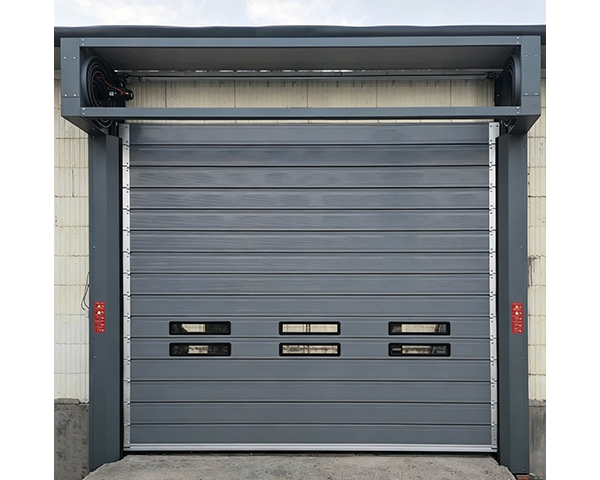
Routine maintenance helps ensure reliable performance.
Check:
Door curtain condition
Sensor cleanliness
Guide rail obstructions
Abnormal noise
Inspect:
Motor operation
Fasteners
Electrical connections
Safety devices
Perform comprehensive servicing including:
System diagnostics
Motor inspection
Component replacement
Safety certification testing
A high speed automatic industrial door is an automated door system designed for rapid opening and closing in industrial environments, improving efficiency, safety, and environmental control.
Common industries include manufacturing, warehousing, logistics, food processing, pharmaceuticals, automotive production, and cold storage facilities.
Depending on the model, opening speeds can reach up to 2.0 meters per second, significantly faster than conventional industrial doors.
Yes. High speed automatic industrial doors are specifically designed for intensive daily use and can exceed one million operating cycles.
Yes. Specialized cold storage models are available for refrigerated and freezer applications.
Standard safety features include photoelectric sensors, safety edges, emergency stop systems, obstacle detection, and manual emergency operation.
Yes. The intelligent control system can integrate with RFID readers, card access systems, building automation platforms, and remote monitoring systems.
Daily inspections, monthly preventive maintenance, and annual comprehensive servicing are recommended for optimal performance.
High speed automatic industrial doors provide an ideal solution for facilities seeking efficient access control, energy savings, environmental protection, and workplace safety. Their rapid operation, intelligent automation, durable construction, and advanced safety systems make them suitable for a wide range of industrial applications.
Whether installed in warehouses, manufacturing facilities, logistics centers, food processing plants, pharmaceutical cleanrooms, or cold storage warehouses, high speed automatic industrial doors help improve operational efficiency while reducing long-term operating costs. With proper installation and maintenance, these doors provide reliable performance and excellent return on investment for modern industrial facilities.
A high speed automatic industrial door is one of the most important access solutions used in modern industrial facilities, logistics centers, warehouses, manufacturing plants, pharmaceutical factories, food processing facilities, cold storage warehouses, and cleanroom environments. Designed to open and close rapidly while maintaining safety, efficiency, and environmental control, these doors have become a standard feature in facilities where operational speed and productivity are critical.
Unlike conventional industrial doors, a High speed automatic industrial door is engineered to minimize waiting times, reduce energy loss, improve t
raffic flow, and protect internal environments from dust, insects, moisture, and temperature fluctuations. With advances in automation technology, intelligent control systems, and energy-efficient materials, high speed industrial doors are increasingly integrated into smart factories and automated logistics systems.
As global industries continue to prioritize productivity, safety, and sustainability, the demand for high speed automatic industrial doors continues to grow across various sectors.
This comprehensive guide explains everything facility owners, architects, engineers, contractors, warehouse operators, and industrial buyers need to know about high speed automatic industrial doors, including definitions, types, materials, performance characteristics, technical specifications, applications, maintenance practices, and future market trends.
What Is a High Speed Automatic Industrial Door?
A high speed automatic industrial door is a specialized industrial access system designed to open and close significantly faster than traditional industrial doors.
These doors are typically powered by electric motors and controlled through automated systems such as:
Motion sensors
Radar detectors
Remote controls
Pull cord switches
RFID readers
Vehicle detection systems
Access control systems
PLC automation platforms
The primary objective of a high speed automatic industrial door is to enable rapid and efficient movement of people, vehicles, forklifts, and goods while maintaining environmental separation between different areas.
Key Characteristics of High Speed Automatic Industrial Doors
High speed automatic industrial doors differ from conventional industrial doors in several important ways.
Typical operating speeds include:
| Door Type | Opening Speed |
|---|---|
| Conventional Rolling Door | 0.1–0.3 m/s |
| Standard Industrial Door | 0.2–0.5 m/s |
| High Speed Automatic Industrial Door | 0.8–2.5 m/s |
| Specialized High Speed Door | Up to 4.0 m/s |
Fast operation significantly improves workflow efficiency.
Automatic control eliminates manual intervention.
Benefits include:
Improved productivity
Reduced labor requirements
Consistent operation
Enhanced convenience
High speed doors are engineered for intensive use.
Typical cycle ratings:
| Door Category | Daily Cycles |
|---|---|
| Standard Industrial Door | 20–50 |
| Heavy Duty Door | 50–100 |
| High Speed Automatic Industrial Door | 300–1500+ |
High speed automatic industrial doors help maintain:
Temperature control
Cleanliness
Humidity levels
Air pressure balance
Why High Speed Automatic Industrial Doors Are Important
Modern industrial facilities rely heavily on speed and efficiency.
Every second a door remains open can result in:
Energy loss
Dust infiltration
Temperature instability
Reduced productivity
A high speed automatic industrial door minimizes these issues by reducing door opening times and ensuring automatic closure immediately after passage.
Main Types of High Speed Automatic Industrial Doors
High speed roll-up doors are among the most common industrial door solutions.
The flexible curtain rolls vertically onto a drum positioned above the opening.
Compact design
Fast operation
Low maintenance
Space efficiency
Warehouses
Logistics centers
Manufacturing plants
High speed spiral doors utilize rigid insulated panels that move along a spiral track.
High speed operation
Excellent thermal insulation
Superior security
Quiet performance
Automotive factories
Distribution centers
Industrial plants
Designed specifically for controlled environments.
Dust control
Pressure management
Hygienic operation
Smooth surfaces
Pharmaceutical facilities
Electronics manufacturing
Biotechnology laboratories
Engineered for cold storage facilities.
Low-temperature operation
Frost resistance
Thermal insulation
Rapid opening cycles
Frozen food storage
Cold chain logistics
Refrigerated warehouses

Constructed using reinforced rubber materials.
Impact resistance
Wind resistance
Durability
Mining facilities
Heavy industry
Waste management plants
Components of a High Speed Automatic Industrial Door
The curtain serves as the primary barrier.
Common materials include:
| Material | Characteristics |
|---|---|
| PVC Fabric | Lightweight and flexible |
| Reinforced PVC | Increased durability |
| Insulated Panels | Thermal efficiency |
| Steel Panels | Security and strength |
| Aluminum Panels | Lightweight construction |
The motor powers door movement.
Typical features include:
High efficiency
Variable frequency control
Long service life
Low noise operation
Guide rails maintain curtain alignment.
Common materials:
Galvanized steel
Stainless steel
Aluminum alloy
The control unit manages operation.
Functions include:
Opening commands
Safety monitoring
Speed adjustment
Diagnostic reporting
Modern high speed automatic industrial doors incorporate multiple safety systems.
Detect obstacles during operation.
Stop door movement upon contact.
Allow manual operation during power outages.
Provide additional protection.
Technical Specifications of High Speed Automatic Industrial Doors
| Parameter | Typical Range |
|---|---|
| Door Width | 1m–12m |
| Door Height | 2m–10m |
| Opening Speed | 0.8–2.5 m/s |
| Closing Speed | 0.5–1.5 m/s |
| Wind Resistance | Class 3–12 |
| Motor Power | 0.75–5.5 kW |
| Operating Voltage | 220V/380V |
| Operating Temperature | -35°C to +70°C |
| Protection Rating | IP54–IP65 |
| Daily Operating Cycles | 300–1500+ |
Advantages of High Speed Automatic Industrial Doors
Rapid opening and closing reduce waiting times.
Benefits include:
Faster logistics operations
Reduced forklift congestion
Enhanced workflow
Every door opening results in energy exchange.
A high speed automatic industrial door minimizes:
Heated air loss
Cooling loss
HVAC workload
| Facility Type | Potential Savings |
|---|---|
| Warehouse | 10–20% |
| Cold Storage | 20–40% |
| Manufacturing Plant | 10–25% |
High speed automatic industrial doors help control:
Dust
Insects
Moisture
Temperature
Automatic operation reduces workplace risks.
Examples include:
Collision prevention
Obstacle detection
Emergency stopping
Modern door systems use:
Durable motors
Wear-resistant materials
Intelligent diagnostics
These features reduce maintenance requirements.
Materials Used in High Speed Automatic Industrial Doors
PVC remains one of the most popular materials.
Lightweight
Flexible
Economical
Fast movement
Offers additional strength.
Characteristics include:
Tear resistance
Long lifespan
Improved stability
Common in premium industrial doors.
Benefits:
Corrosion resistance
Low weight
Modern appearance
Used in structural components.
Advantages:
Strength
Durability
Cost effectiveness
Ideal for hygienic environments.
Applications:
Food processing
Pharmaceutical production
Chemical plants
Industrial Applications
Warehouses represent one of the largest markets for high speed automatic industrial doors.
Requirements include:
Frequent operation
Fast access
Environmental control
Distribution facilities benefit from:
Reduced loading times
Improved traffic flow
Better operational efficiency
Industrial production facilities use high speed automatic industrial doors to separate:
Production zones
Storage areas
Assembly lines
Food facilities require:
Hygiene
Temperature control
Insect prevention
Pharmaceutical facilities demand:
Controlled environments
Cleanroom compatibility
Air pressure management
Cold storage operations rely heavily on rapid door operation.
Benefits include:
Reduced energy loss
Frost prevention
Product protection
Wind Resistance Performance
Wind resistance is critical for external installations.
| Class | Wind Speed |
|---|---|
| Class 3 | Moderate conditions |
| Class 5 | Industrial applications |
| Class 8 | High-wind regions |
| Class 12 | Extreme environments |
Features that improve wind resistance include:
Reinforced curtains
Wind bars
Heavy-duty guide systems
Strong frames
Thermal Insulation Performance
Insulated high speed automatic industrial doors provide superior thermal performance.
Properties:
| Property | Value |
|---|---|
| Density | 40–50 kg/m³ |
| Thermal Conductivity | 0.022–0.028 W/m·K |
| Moisture Resistance | Excellent |
Benefits:
High insulation value
Structural strength
Long service life
Automation Technologies
Automation is a defining feature of modern high speed automatic industrial doors.
Automatically opens doors when vehicles approach.
Advantages:
Hands-free operation
Improved traffic flow
Installed beneath pavement surfaces.
Functions:
Vehicle recognition
Automatic activation
Provides secure access management.
Applications:
Logistics facilities
Restricted areas
Smart warehouses
Enables integration with factory automation systems.
Benefits include:
Synchronization with equipment
Process automation
Data collection
Safety Standards and Features
Prevent damage from accidental impacts.
Reduces injury risk.
Allow immediate interruption of movement.
Maintain operation during power outages.
Detect operational abnormalities.
Maintenance Requirements
Proper maintenance maximizes reliability.
Check:
Curtain condition
Sensor functionality
Guide rail cleanliness
Inspect:
Motor performance
Fasteners
Safety devices
Professional inspection should include:
Electrical systems
Structural components
Operational testing
Common Problems and Solutions
| Problem | Cause | Solution |
|---|---|---|
| Door Does Not Open | Power failure | Check power supply |
| Slow Movement | Motor wear | Inspect motor |
| Excessive Noise | Lack of lubrication | Lubricate components |
| Sensor Failure | Dirty lens | Clean sensor |
| Misalignment | Guide damage | Adjust rails |
| Frequent Stops | Obstruction detection | Inspect safety devices |
Choosing the Right High Speed Automatic Industrial Door
Door dimensions determine:
Motor capacity
Structural design
Material selection
High-cycle environments require:
Industrial-grade motors
Reinforced components
Premium control systems
Consider:
Temperature
Humidity
Wind exposure
Chemical exposure
Energy-sensitive facilities benefit from insulated designs.
Evaluate:
Personnel traffic
Vehicle traffic
Regulatory requirements
Market Demand and Industry Growth
Several factors are driving demand for high speed automatic industrial doors.
Growing logistics networks require:
Faster warehouse operations
Efficient loading systems
Smart factories increasingly rely on automated access systems.
Governments and businesses are prioritizing:
Reduced energy consumption
Sustainable building design
Global food and pharmaceutical distribution continues to expand.
Emerging Technologies
Modern systems increasingly include:
Remote diagnostics
Cloud connectivity
Predictive maintenance
AI can optimize:
Door opening cycles
Traffic management
Maintenance scheduling
IoT-enabled high speed automatic industrial doors provide:
Real-time status monitoring
Data analytics
Automated reporting
Future facilities may use digital twins to simulate:
Door performance
Maintenance needs
Energy consumption
Sustainability Benefits
High speed automatic industrial doors support sustainability objectives through:
Reduced energy use
Longer service life
Lower maintenance requirements
Recyclable materials
Improved building efficiency
Comparison Between High Speed Automatic Industrial Doors and Conventional Industrial Doors
| Feature | High Speed Automatic Industrial Door | Conventional Industrial Door |
|---|---|---|
| Opening Speed | 0.8–2.5 m/s | 0.1–0.5 m/s |
| Automation Level | High | Moderate |
| Energy Efficiency | Excellent | Average |
| Traffic Handling | Very High | Moderate |
| Environmental Control | Excellent | Limited |
| Maintenance Frequency | Low | Moderate |
| Initial Cost | Higher | Lower |
| Long-Term Value | Excellent | Moderate |
Frequently Asked Questions
Most high-quality systems can operate reliably for 10–20 years when properly maintained and serviced.
Depending on design and components, many systems support between 300,000 and several million operating cycles over their lifetime.
Yes. Specialized insulated models are specifically designed for freezer rooms, refrigerated warehouses, and cold chain logistics applications.
Yes. Many external models feature reinforced curtains, wind bars, and heavy-duty guide systems capable of meeting high wind resistance classifications.
Modern systems typically include photoelectric sensors, safety edges, emergency stop functions, obstacle detection systems, and manual emergency operation mechanisms.
Yes. Many systems support PLC controls, RFID access, building management systems, warehouse management platforms, and IoT monitoring solutions.
Conclusion
A high speed automatic industrial door has become an essential component of modern industrial facilities, warehouses, logistics centers, manufacturing plants, cleanrooms, pharmaceutical operations, and cold storage environments. By combining rapid operation, intelligent automation, superior environmental control, and advanced safety features, these doors significantly improve productivity while reducing energy consumption and operational costs.
As industrial automation, smart manufacturing, and sustainable building practices continue to evolve, the role of high speed automatic industrial doors will become even more important. Their ability to support efficient workflows, maintain environmental integrity, enhance workplace safety, and integrate with intelligent facility management systems makes them a valuable long-term investment for virtually every industrial sector.
Organizations seeking to improve operational efficiency, environmental control, and facility performance increasingly recognize that high speed automatic industrial doors are not merely access points but critical infrastructure elements that contribute directly to productivity, energy savings, safety, and overall business success.
 RELATED
Shenyang Manlong Metal Products Co., Ltd.


Copyright © 2026 Shenyang Manlong Metal Products Co., Ltd. All rights reserved Applications
This website uses cookies to ensure you get the best experience on our website.

 Español
 Portugues
 Pусский
 Français
 Deutsch
 العربية
 ไทย
ไทย Türk dili
 Tiếng Việt



 Phone
Phone