


Industrial flexible doors are a category of high-performance industrial access systems made from reinforced flexible materials such as PVC fabric, combined with automated drive mechanisms. Unlike rigid steel or aluminum doors, flexible doors are designed to absorb impact, operate at high speed, and adapt to frequent opening and closing cycles in demanding industrial environments.
They are widely used in warehouses, logistics centers, food processing plants, pharmaceutical workshops, cleanrooms, manufacturing facilities, and large industrial buildings where efficiency, sealing performance, and durability are critical.
Industrial flexible doors include several types such as PVC fast rolling doors, Rapid Stacking Doors, flexible folding doors, high-speed roll-up doors, and insulated flexible doors. Each type is designed for specific operational requirements such as wind resistance, temperature control, dust prevention, or high-frequency traffic flow.
Product Features
Industrial flexible doors are designed for fast opening and closing to improve operational efficiency.
Typical performance:
Opening speed: 0.6–2.0 m/s
Closing speed: 0.5–1.5 m/s
Automatic sensor activation
High-frequency operation capability
Fast operation reduces waiting time for vehicles, forklifts, and personnel.
The door curtain is made of reinforced PVC or composite flexible materials.
Advantages include:
High elasticity and flexibility
Strong impact resistance
Quick recovery after collision
Lightweight structure
This allows the door to withstand accidental impacts without permanent damage.
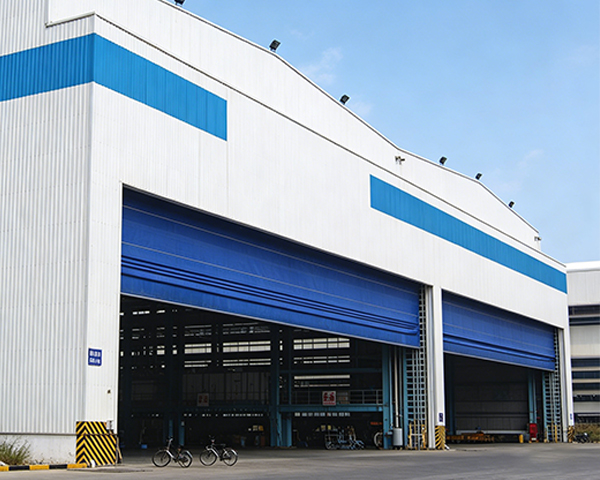
Flexible doors provide effective isolation between different environments.
Sealing benefits:
Dust control
Airflow reduction
Temperature stabilization
Odor and contamination prevention
This makes them suitable for clean and controlled environments.
By reducing air exchange between indoor and outdoor spaces, industrial flexible doors help lower energy consumption.
Energy-saving advantages:
Reduced HVAC load
Stable indoor temperature
Lower heating and cooling costs
Improved environmental efficiency
Many industrial flexible doors are reinforced to withstand wind pressure.
Wind-resistant features:
Aluminum alloy reinforcement bars
Heavy-duty guide rails
Tension balancing systems
Structural stabilization design
Modern industrial flexible doors are equipped with automated control systems.
Control options include:
Radar motion sensors
Infrared sensors
Remote control systems
RFID access control
PLC integration
Automation improves workflow efficiency and reduces manual operation.
Industrial environments require reliable safety systems.
Standard safety features:
Infrared safety photocells
Emergency stop function
Anti-fall protection system
Obstacle detection system
Manual emergency release
Main Types of Industrial Flexible Doors
Used for high-speed access in warehouses and production facilities.
Very fast operation
Lightweight flexible curtain
Ideal for frequent traffic
Designed for large openings and strong wind resistance.
Multi-section lifting structure
Suitable for oversized entrances
High structural stability
Designed for temperature-controlled environments.
Thermal insulation layer
Energy-saving performance
Cold storage compatibility
Used for medium to large industrial openings.
Compact folding design
Strong durability
Smooth operation
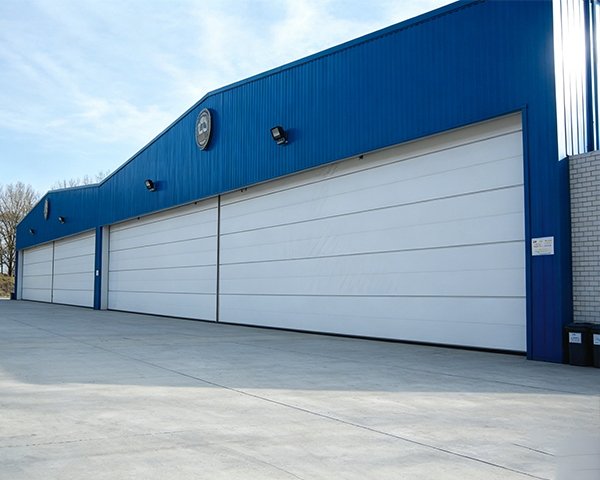
Used in cleanrooms and logistics zones.
Compact structure
High opening speed
Dust control performance
Technical Specifications
Specifications vary depending on door type and application.
| Parameter | Specification |
|---|---|
| Product Type | Industrial Flexible Door |
| Curtain Material | Reinforced PVC / composite fabric |
| Frame Material | Galvanized steel / aluminum alloy |
| Opening Speed | 0.6–2.0 m/s |
| Closing Speed | 0.5–1.5 m/s |
| Maximum Width | Up to 20 m |
| Maximum Height | Up to 15 m |
| Wind Resistance | Class 6–12 (depending on model) |
| Power Supply | 220V / 380V |
| Control System | PLC intelligent control |
| Operating Temperature | -30°C to +70°C |
| Protection Level | IP54–IP65 |
| Service Life | 500,000–1,000,000 cycles |
| Safety System | Sensors, anti-fall, emergency stop |
Main Components
The curtain is the core functional component.
Features:
Reinforced PVC fabric
High tensile strength
Anti-aging coating
Optional transparent viewing panels
Provides stable and fast door movement.
Advantages:
High torque output
Smooth acceleration
Low maintenance
Long service life
Ensures smooth and stable operation.
Functions:
Curtain alignment
Wind resistance support
Reduced vibration
Improved sealing
Manages automation and safety functions.
Includes:
Sensor processing unit
Operation control logic
Fault detection system
Safety interlock system
Application Scenarios
Used for high-frequency access points.
Benefits:
Faster logistics flow
Reduced congestion
Improved efficiency
Used between production zones.
Advantages:
Environmental separation
Dust control
Operational efficiency
Maintains hygiene and temperature control.
Supports cleanroom and controlled environments.
Helps maintain stable temperature conditions.
Benefits:
Reduced energy loss
Improved refrigeration efficiency
Better product protection
Supports large-scale industrial access requirements.
Advantages of Industrial Flexible Doors
Fast opening improves workflow and reduces delays.
Suitable for multiple industrial environments.
Reduces air exchange and operating costs.
Absorbs impact and reduces maintenance costs.
Suitable for small, medium, and large industrial facilities.
Simple structure ensures long-term reliability.
Installation Guidelines
Measure door opening accurately
Confirm structural strength
Ensure electrical compatibility
Check installation space
Install guide rails
Assemble frame structure
Mount curtain system
Install motor and control system
Connect sensors
Test system operation
After installation:
Test opening and closing speed
Verify sensor response
Check sealing performance
Confirm safety system operation
Operating Instructions
Sensor detects movement
Door opens automatically
Passage completes
Door closes automatically
Used during maintenance or emergency situations.
Do not block door movement
Keep sensors clean
Avoid manual forcing of curtain
Follow maintenance schedule
Use manual release system
Operate carefully if power is lost
Restore automation after recovery
Maintenance Recommendations
Check curtain condition
Clean guide rails
Inspect sensors
Inspect motor system
Check fasteners
Test safety devices
Full system inspection
Electrical check
Component replacement if needed
Frequently Asked Questions
They are high-performance industrial doors made from flexible materials like reinforced PVC, designed for fast, frequent operation and environmental control.
They are widely used in warehouses, factories, logistics centers, food plants, pharmaceutical facilities, and cleanrooms.
Yes, they are specifically designed for continuous industrial operation.
Yes, they reduce air exchange and help stabilize indoor temperatures.
Yes, size, structure, and control systems can be customized according to project requirements.
Yes, they integrate with sensors, PLC systems, and smart industrial controls.
Conclusion
Industrial flexible doors are essential modern industrial access solutions that combine flexibility, durability, high-speed performance, and intelligent automation. Their ability to adapt to different environments, reduce energy consumption, and withstand frequent operation makes them a key component in warehouses, manufacturing plants, logistics systems, and controlled environments.
With multiple configurations such as PVC fast rolling doors, rapid stacking doors, and insulated flexible doors, they provide versatile and efficient solutions for today’s industrial infrastructure needs.
Industrial flexible doors are high-performance access systems designed for industrial buildings, warehouses, logistics centers, cleanrooms, cold storage facilities, and manufacturing workshops. Unlike rigid doors, they use flexible curtain materials such as reinforced PVC fabric or composite textiles, allowing fast operation, impact resistance, and adaptability to high-frequency traffic environments.
These doors are widely used in modern industrial infrastructure because they provide a balance of:
High-speed operation
Large opening capability
Energy efficiency
Environmental separation
Low maintenance cost
Strong impact resistance
As industrial automation and logistics systems continue to evolve, flexible door systems have become a standard solution for efficient material flow and environmental control.
What Are Industrial Flexible Doors?
Industrial flexible doors are door systems that use soft, flexible curtain materials instead of rigid panels. The curtain is supported by:
Aluminum or steel guide rails
Motor-driven rolling or stacking mechanisms
Reinforced wind bars or support strips
Automated control systems
They open and close quickly while maintaining a sealed or semi-sealed industrial environment.
Main Types of Industrial Flexible Doors
PVC fast rolling door
High-speed vertical rolling operation
Lightweight PVC curtain
Frequent-cycle industrial use
Warehouses
Logistics centers
Clean production zones
Curtain folds upward in sections
Suitable for large openings
Strong wind resistance
Large workshops
Industrial factories
Loading bays
Multi-layer thermal curtain
Energy-saving performance
Sealed structure
Cold storage
Food processing
Temperature-controlled warehouses
Reinforced wind bars
Heavy-duty structure
Outdoor adaptability
Ports
Outdoor warehouses
Steel factories
Anti-static PVC
Dust-proof sealing
Hygienic design
Electronics industry
Pharmaceutical workshops
Precision manufacturing
Core Structure of Industrial Flexible Doors
The main barrier component.
Reinforced PVC fabric
Polyester fiber mesh
Anti-static coating (optional)
Flame-retardant coating (optional)
Environmental separation
Impact absorption
Flexibility for rapid movement
Provides mechanical movement.
Industrial motor
Gear reduction system
Frequency inverter
Torque control unit
Ensures stable operation.
Aluminum alloy
Galvanized steel
Stainless steel (optional)
Keeps curtain aligned
Supports wind resistance
Improves sealing
Manages operation logic.
Automatic opening/closing
Speed adjustment
Fault detection
Safety monitoring
Essential for industrial environments:
Infrared sensors
Radar detection systems
Emergency stop buttons
Bottom safety rebound edge
Key Features of Industrial Flexible Doors
| Parameter | Typical Range |
|---|---|
| Opening Speed | 0.6 – 2.5 m/s |
| Closing Speed | 0.5 – 1.5 m/s |
Benefits:
Reduces waiting time
Improves logistics flow
Minimizes energy loss
Flexible curtain design allows:
Forklift impact resistance
Automatic recovery after collision
Reduced structural damage
Fast opening and sealing reduce:
HVAC energy loss
Temperature fluctuations
Air exchange rates
Suitable for:
Wide warehouse doors
Industrial loading bays
Large machinery access
Advantages:
Simple structure
Fewer mechanical parts
Easy replacement of curtain sections
Technical Specifications
| Parameter | Value Range |
|---|---|
| Width | 1m – 20m+ |
| Height | 2m – 15m+ |
| Wind Resistance | Class 6 – Class 12 |
| Operating Cycles | 500,000 – 2,000,000+ |
| Temperature Range | -30°C to +70°C |
| Protection Level | IP54 – IP65 |
| Motor Power | 0.75 – 7.5 kW |
Advantages of Industrial Flexible Doors
Fast opening improves industrial workflow.
Lower cost compared to rigid industrial doors.
Suitable for multiple industries and environments.
Maintains temperature, dust, and humidity balance.
Curtain absorbs forklift and equipment impacts.
Supports modern smart factory systems.
Applications of Industrial Flexible Doors
High-speed cargo movement
Loading dock separation
Inventory management efficiency
Production zone separation
Equipment protection
Workflow optimization
Temperature retention
Energy savings
Fast access cycles
Dust control
Anti-static environments
Contamination prevention
Hygienic separation
Temperature stability
Compliance with safety standards
Wind resistance
Large opening access
Durable performance
Comparison With Other Door Systems
| Feature | Flexible Doors | Rigid Industrial Doors | Sliding Doors |
|---|---|---|---|
| Speed | High | Medium | Low |
| Cost | Low–Medium | High | High |
| Flexibility | Excellent | Low | Medium |
| Impact Resistance | Excellent | Medium | Low |
| Maintenance | Low | Medium | High |
| Energy Efficiency | High | Medium | Medium |
Industry Trends
Integration with sensors and control systems.
Increasing demand for reduced HVAC consumption.
Need for faster and more responsive doors.
Improved durability and insulation performance.
Real-time diagnostics and predictive maintenance.
Maintenance Guidelines
Curtain condition
Sensor function
Door movement
Motor inspection
Guide rail cleaning
Fastener tightening
Full system inspection
Electrical testing
Curtain replacement evaluation
Common Issues and Solutions
| Issue | Cause | Solution |
|---|---|---|
| Slow operation | Motor wear | Service drive system |
| Curtain damage | Impact | Replace curtain section |
| Sensor failure | Dust interference | Clean or recalibrate |
| Air leakage | Seal wear | Replace sealing strips |
| Misalignment | Rail obstruction | Clean guide system |
Frequently Asked Questions
They are high-speed industrial doors made from flexible materials like PVC, designed for fast and efficient access control.
They are used in warehouses, factories, cleanrooms, cold storage, and logistics centers.
Yes, they are designed for high-frequency industrial use.
Yes, they reduce air exchange and HVAC load significantly.
Yes, they support radar, sensors, RFID, and smart factory integration.
Industrial flexible doors are a modern industrial access solution combining speed, flexibility, durability, and energy efficiency. Their lightweight structure, high-speed operation, and smart automation capabilities make them essential for warehouses, manufacturing plants, logistics systems, and controlled environments.
As industrial operations become increasingly automated and energy-conscious, flexible door systems will continue to play a key role in improving efficiency, safety, and environmental performance across global industrial sectors.
Shenyang Manlong Metal Products Co., Ltd.


Copyright © 2026 Shenyang Manlong Metal Products Co., Ltd. All rights reserved Applications
This website uses cookies to ensure you get the best experience on our website.

 Español
 Portugues
 Pусский
 Français
 Deutsch
 العربية
 ไทย
ไทย Türk dili
 Tiếng Việt



 Phone
Phone