

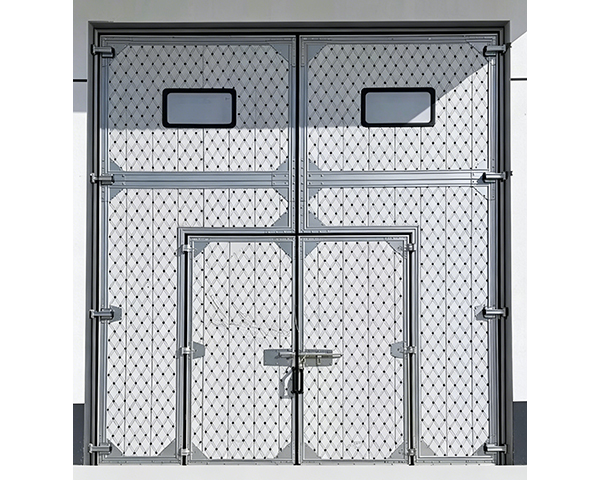
Industrial flexible doors are essential access-control solutions designed for high-traffic
logistics centers, warehouses, distribution hubs, factories, and manufacturing plants.
Built for fast operation, frequent use, and demanding environments, these doors help
improve workflow efficiency, support indoor climate control, enhance safety, and reduce
energy loss. As modern facilities continue to prioritize productivity, automation, hygiene,
and operational reliability, the demand for industrial flexible doors has grown rapidly
across global supply chains and production sites.
In logistics and manufacturing environments, every second matters. Forklifts, pallet trucks,
conveyors, production lines, and loading operations require door systems that can open and
close quickly without creating bottlenecks. Industrial flexible doors are specifically
engineered to meet these needs. Unlike traditional rigid doors, they are designed with
flexible materials, high-cycle mechanisms, and compact structures that support efficient
movement while maintaining protection against dust, drafts, noise, temperature fluctuations,
and unauthorized access.
This guide provides a complete overview of industrial flexible doors for logistics and
manufacturing plants, including definitions, key advantages, technical specifications,
common materials, operating modes, selection factors, and application scenarios. The content
is written in SEO-friendly English and structured for easy use in blog posts, category pages,
service pages, and industry landing pages.
Industrial flexible doors are high-performance door systems made from lightweight, flexible,
and durable materials such as PVC, reinforced fabric, or composite membranes. They are
designed for rapid opening and closing, space-saving installation, and reliable operation in
industrial settings. These doors are commonly used in logistics warehouses, manufacturing
plants, clean areas, cold storage zones, production partitions, loading docks, and internal
traffic routes.
The term “flexible” refers to both the door curtain material and the functional design. The
door curtain bends or rolls instead of operating like a traditional solid panel. Depending on
the configuration, industrial flexible doors may include rapid roll-up doors, high-speed PVC
doors, flexible strip doors, folding fabric doors, and sectional soft doors. While designs may
vary, the common goal is the same: provide fast, efficient, and dependable access control for
industrial operations.
Industrial flexible doors are widely recognized for their ability to support continuous
operation in demanding environments. They are often installed in areas where airflow control,
temperature separation, contamination prevention, or traffic efficiency is critical. Their
compact design reduces floor-space requirements and supports smooth logistics flow in high-
volume facilities.
Logistics and manufacturing plants operate under constant pressure to improve throughput,
maintain environmental stability, and reduce operating costs. Door systems play a much larger
role than many facility managers initially expect. An inefficient door can create heat loss,
slow down internal traffic, allow dust or contaminants to enter, and increase energy
consumption. Industrial flexible doors help solve these problems by providing controlled
access with minimal delay.
In logistics facilities, fast door cycles support the movement of goods, vehicles, and staff
between receiving, sorting, storage, and dispatch areas. In manufacturing plants, flexible
doors help separate production stages, maintain cleanliness, and protect equipment or finished
products from environmental interference. They also improve workplace safety by reducing the
risk of collision, enhancing visibility, and enabling better workflow organization.
As industrial facilities become more automated, door systems must integrate with sensors,
control panels, motion detectors, access control systems, and safety devices. Industrial
flexible doors are compatible with modern automation strategies and can be adapted for
intelligent operation, making them highly suitable for advanced logistics and manufacturing
ecosystems.
| Advantage | Description | Industrial Benefit |
|---|---|---|
| Fast opening and closing | Designed for rapid cycle times with minimal waiting | Improves traffic flow and reduces operational delays |
| Energy efficiency | Helps reduce air exchange between zones | Lowers heating and cooling losses |
| Space-saving design | Compact construction requires less clearance | Ideal for tight production and storage layouts |
| Dust and contamination control | Supports separation of clean and dirty zones | Helps maintain product quality and hygiene |
| Noise reduction | Flexible barriers can dampen sound transmission | Improves working conditions in busy plants |
| High-frequency performance | Built for repeated daily operation | Suitable for heavy-use industrial traffic |
| Safety integration | Supports sensors, alarms, and automatic stop functions | Reduces collision and injury risk |
| Low maintenance | Simple structure with fewer wear points | Reduces downtime and service costs |
These advantages make industrial flexible doors a practical and cost-effective choice for
facilities that need consistent performance, rapid operation, and efficient environmental
separation.
High-speed roll-up doors are among the most common industrial flexible doors used in logistics
and manufacturing plants. They open vertically at high speed and use a flexible curtain that
rolls into a compact drum above the opening. These doors are ideal for busy traffic zones,
internal process areas, and locations where temperature and dust control are important.
Rapid PVC doors are designed with durable soft curtains and high-speed motors. They are often
installed in warehouses, assembly lines, packaging areas, and clean zones. Their fast cycle
times help minimize air loss and improve productivity.
Flexible strip doors consist of overlapping PVC strips that allow easy passage for personnel
and equipment. They are commonly used in simple industrial partitions, cold storage entrances,
and dust control applications. They provide basic separation while allowing easy access.
Fabric folding doors use reinforced textile materials and folding mechanisms to create a broad,
flexible opening. They are suitable for large industrial entrances, maintenance zones, and
areas requiring wide access for vehicles or oversized equipment.
Soft sectional doors combine flexible materials with sectional movement patterns. They are
often used in manufacturing plants where a balance of insulation, speed, and reliability is
required. These doors can be customized for different opening sizes and working conditions.
Industrial flexible doors are highly versatile and can be used in many different zones within
logistics and manufacturing facilities. Their adaptability is one of the main reasons they
have become so widely used across industrial operations.
| Application Area | Typical Use | Main Purpose |
|---|---|---|
| Warehouse entrances | Main access for goods movement and internal traffic | Fast and efficient passage |
| Loading docks | Entry points for trucks, forklifts, and pallet handling | Traffic control and weather protection |
| Production lines | Separating process stages and work cells | Workflow optimization and contamination control |
| Assembly areas | Protecting sensitive operations from dust and drafts | Product quality and environmental stability |
| Cold rooms and freezer zones | Limiting temperature exchange at access points | Energy efficiency and thermal separation |
| Clean rooms | Creating controlled access between clean and non-clean areas | Hygiene and contamination management |
| Packaging rooms | Supporting fast movement between packing and shipping | Operational speed and area separation |
| Maintenance zones | Access for equipment servicing and internal logistics | Convenient and safe passage |
Because industrial flexible doors can be customized in size, structure, and control method,
they are suitable for both large and small openings in a wide variety of industrial settings.
The performance of industrial flexible doors depends on several technical features. When
selecting a door system for logistics or manufacturing plants, facility managers should review
operating speed, material strength, insulation performance, safety accessories, visibility,
sealing quality, and maintenance needs.
One of the most important features of industrial flexible doors is fast cycle performance.
Rapid opening and closing help reduce air leakage, improve throughput, and prevent congestion
in busy production or logistics areas.
The curtain material is usually reinforced PVC or a similar industrial-grade flexible material.
It must resist wear, tearing, impact, and environmental exposure while still moving smoothly
through the operating cycle.
Good sealing helps reduce dust infiltration, air exchange, and temperature loss. This is
particularly important in cold storage, food handling, pharmaceuticals, and clean production
environments.
Industrial flexible doors often include photoelectric sensors, safety edges, motion detectors,
and emergency stop systems. These features help protect workers, vehicles, and products from
accidental contact.
Transparent windows or partial visibility panels can improve safety by allowing operators to
see traffic in the next zone. This is especially useful in areas with forklifts or frequent
cross-traffic.
Many industrial flexible doors support automatic operation through push buttons, radar sensors,
induction loops, remote controls, access cards, or integrated facility management systems.
| Material | Main Properties | Typical Use |
|---|---|---|
| PVC curtain | Flexible, lightweight, durable, easy to clean | High-speed doors, strip doors, partitions |
| Reinforced PVC | Improved tear resistance and strength | Heavy-duty logistics and manufacturing areas |
| Polyester fabric | Strong textile base with protective coating | Large folding or soft sectional doors |
| Transparent PVC panels | Visibility and light transmission | Traffic safety and monitored passageways |
| Insulated flexible layers | Enhanced thermal separation and energy saving | Cold storage and climate-controlled rooms |
| Anti-static materials | Helps reduce static buildup | Electronics, precision manufacturing, clean spaces |
The best material depends on the environment, traffic frequency, temperature conditions,
hygiene requirements, and desired service life. In many facilities, reinforced PVC is a
common choice because it offers a good balance of flexibility, durability, and cost.
| Specification | Typical Range | Notes |
|---|---|---|
| Door opening width | 800 mm to 6000 mm+ | Custom sizes available for industrial access points |
| Door opening height | 1000 mm to 8000 mm+ | Depends on vehicle and equipment clearance |
| Opening speed | 0.5 m/s to 2.5 m/s | High-speed models offer rapid cycle performance |
| Closing speed | 0.3 m/s to 1.5 m/s | May be adjustable for safety and environmental control |
| Operating frequency | Hundreds to thousands of cycles per day | Depends on mechanism quality and usage intensity |
| Curtain thickness | 0.8 mm to 2.0 mm | Varies by model and reinforcement level |
| Temperature resistance | -30°C to +70°C or higher | Material selection should match facility conditions |
| Wind resistance | Moderate to high | Important for external entrances and dock areas |
| Control voltage | 24V, 220V, or industrial-standard options | Depends on automation system requirements |
| Safety system | Photo sensors, safety edge, emergency stop | Basic and advanced safety packages available |
These values are general reference ranges only. Actual product specifications vary depending on
design purpose, facility size, environmental conditions, and operational demands. For SEO and
content purposes, this table helps illustrate the common technical profile of industrial
flexible doors in logistics and manufacturing environments.
Logistics efficiency depends on fast and predictable material flow. Industrial flexible doors
help improve this flow by reducing time spent waiting at access points. When a door opens
quickly and closes automatically, vehicles can move through more efficiently, reducing
congestion and improving throughput.
Flexible doors also support zone separation. For example, receiving areas can be separated from
storage areas, and dispatch areas can be separated from packing rooms. This zoning helps
organize warehouse operations and reduces confusion in busy workspaces. It can also improve
route planning for forklifts and staff by defining clear access paths.
In temperature-controlled logistics, industrial flexible doors reduce air exchange and help
maintain stable internal conditions. This is valuable in cold chain operations, food storage,
and facilities that handle temperature-sensitive goods. Reduced energy loss can contribute to
lower utility costs and more sustainable operations.
Manufacturing plants require controlled movement between production stages. Industrial flexible
doors help create structured zones that support process efficiency, product protection, and
workplace safety. They are often installed between raw material handling areas, processing
rooms, quality control spaces, packaging stations, and finished goods storage.
In many manufacturing environments, dust, smoke, moisture, or noise can negatively affect
operations. Industrial flexible doors provide a barrier that helps minimize these issues while
still allowing quick access. This is especially useful in plants that produce electronics,
automotive parts, food products, pharmaceuticals, textiles, or precision components.
Another advantage is their compatibility with production automation. Flexible doors can be
synchronized with conveyors, sensors, and machine cycles, enabling a smoother and more
intelligent production process. Their quick response times help avoid workflow interruptions
and support lean manufacturing principles.
Choosing the right industrial flexible door requires careful evaluation of facility needs and
operating conditions. The following factors are especially important for logistics and
manufacturing plants.
| Selection Factor | What to Consider | Why It Matters |
|---|---|---|
| Traffic volume | Number of vehicle and personnel passes per hour | Determines cycle durability and speed requirements |
| Opening size | Width and height of the access point | Ensures proper fit and clear passage |
| Environmental control | Need for insulation, dust control, or temperature stability | Helps select curtain material and sealing performance |
| Safety needs | Forklift traffic, pedestrian flow, and visibility | Guides sensor and visibility configuration |
| Automation level | Manual, semi-automatic, or fully automatic operation | Impacts convenience and integration |
| Maintenance access | Ease of inspection, cleaning, and component replacement | Reduces long-term downtime |
| Indoor or outdoor use | Exposure to wind, rain, temperature extremes, or dust | Determines structural strength and sealing needs |
| Industry requirements | Food, pharmaceuticals, electronics, cold storage, or general manufacturing | Shapes hygiene and compliance considerations |
By reviewing these factors early in the planning stage, facility managers can choose a door
solution that supports productivity and reduces operating costs over time.
Industrial flexible doors are typically easier to maintain than many rigid industrial door
systems, but regular inspection is still important. Preventive maintenance helps extend service
life, avoid unexpected downtime, and preserve safe operation.
Common maintenance tasks include checking curtain condition, cleaning tracks or guide rails,
testing sensors, verifying motor and control function, inspecting seals, and confirming that
safety features are operational. In facilities with heavy daily use, scheduled maintenance
should be part of the standard facility management plan.
It is also important to ensure that the door matches the environment. For example, a door used
in a cold storage room should be selected with suitable low-temperature performance, while a
door in a high-dust production area may require reinforced materials and easier-to-clean
surfaces.
Energy efficiency is a major reason why industrial flexible doors are popular in logistics and
manufacturing plants. Every time a large industrial opening remains open, conditioned air can
escape and unconditioned air can enter. This increases heating, cooling, and ventilation loads.
Industrial flexible doors reduce this problem through fast operation and improved sealing.
These doors also support greener facility management by helping reduce energy waste. In climate-
controlled environments, even small reductions in air loss can have a meaningful effect over
time. This is especially valuable in large warehouses and production facilities where doors may
open hundreds or thousands of times each day.
In addition, flexible doors can help reduce contamination and material waste by creating cleaner
operational zones. This can improve overall process stability and reduce the need for frequent
cleanup or rework.
Safety is a core requirement in industrial door selection. Industrial flexible doors should be
designed and installed with appropriate protective features, especially in facilities with
forklift traffic, pedestrian activity, or automated equipment.
Important safety considerations include collision resistance, emergency stop response,
obstruction detection, soft-edge protection, warning indicators, and safe opening/closing
speeds. Transparent vision panels may also improve awareness and reduce the risk of accidental
impact at cross-traffic points.
Depending on the application, industrial flexible doors may need to support hygiene standards,
fire separation strategies, internal safety protocols, or temperature-sensitive storage
requirements. The exact compliance needs vary by industry and region, so facility managers
should always review site-specific standards when planning a door project.
For SEO purposes, industrial flexible doors are often associated with search terms such as
industrial flexible doors, high-speed industrial doors,
PVC rapid doors, logistics warehouse doors,
manufacturing plant doors, fast action industrial doors,
energy efficient industrial doors, flexible access doors,
warehouse high-speed doors, and industrial door solutions.
Additional relevant phrases include dust control door, temperature
control door, cold storage flexible door, clean room door,
automated industrial door, and high cycle door system.
Naturally integrating these terms into a page can help strengthen topical relevance for search
engines while keeping the content useful for readers.
Industrial flexible doors are a practical and high-value solution for logistics and
manufacturing plants that need fast access, energy efficiency, environmental separation, and
reliable daily operation. Their flexible structure, compact design, automation compatibility,
and wide application range make them suitable for warehouses, loading docks, production lines,
clean areas, cold rooms, and many other industrial spaces.
When selected correctly, industrial flexible doors can improve traffic flow, reduce energy
consumption, support safer operations, and contribute to better facility performance. For
businesses focused on modern industrial efficiency, these doors remain one of the most useful
access-control technologies available today.
```
Shenyang Manlong Metal Products Co., Ltd.


Copyright © 2026 Shenyang Manlong Metal Products Co., Ltd. All rights reserved Applications
This website uses cookies to ensure you get the best experience on our website.

 Español
 Portugues
 Pусский
 Français
 Deutsch
 العربية
 ไทย
ไทย Türk dili
 Tiếng Việt



 Phone
Phone
Comment
(0)